Assembling different numbers of poles economically
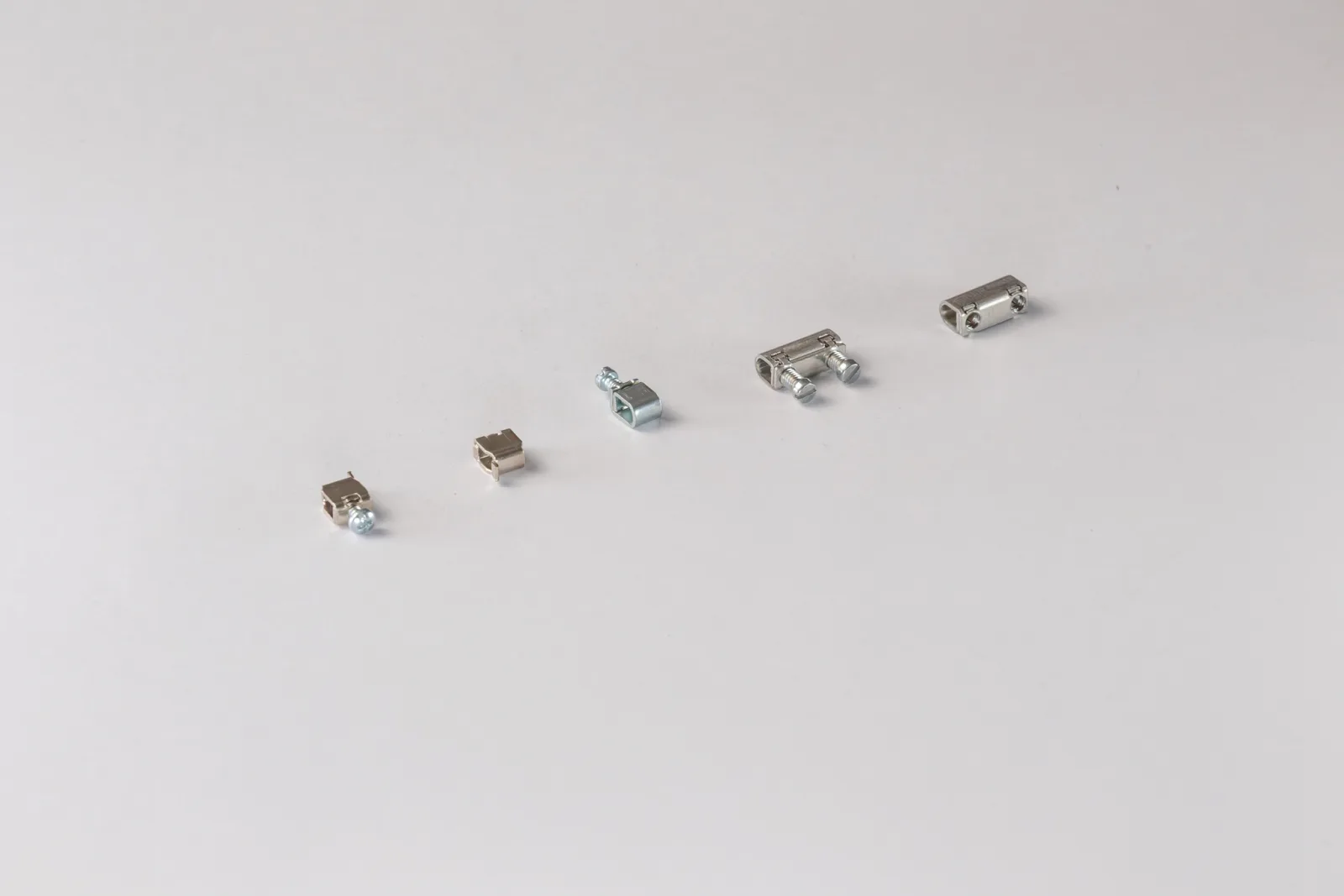
Terminals are manufactured with different numbers of poles. With a conventionally designed rotary indexing machine, the number of processing stations required would increase with the number of poles. For a five-pole terminal, the same function would be required several times over.
However, variants with more than three poles are produced much less frequently. Equipping the machine with additional stations for these cases would have been technically complex and economically unreasonable.
One station handles several work steps
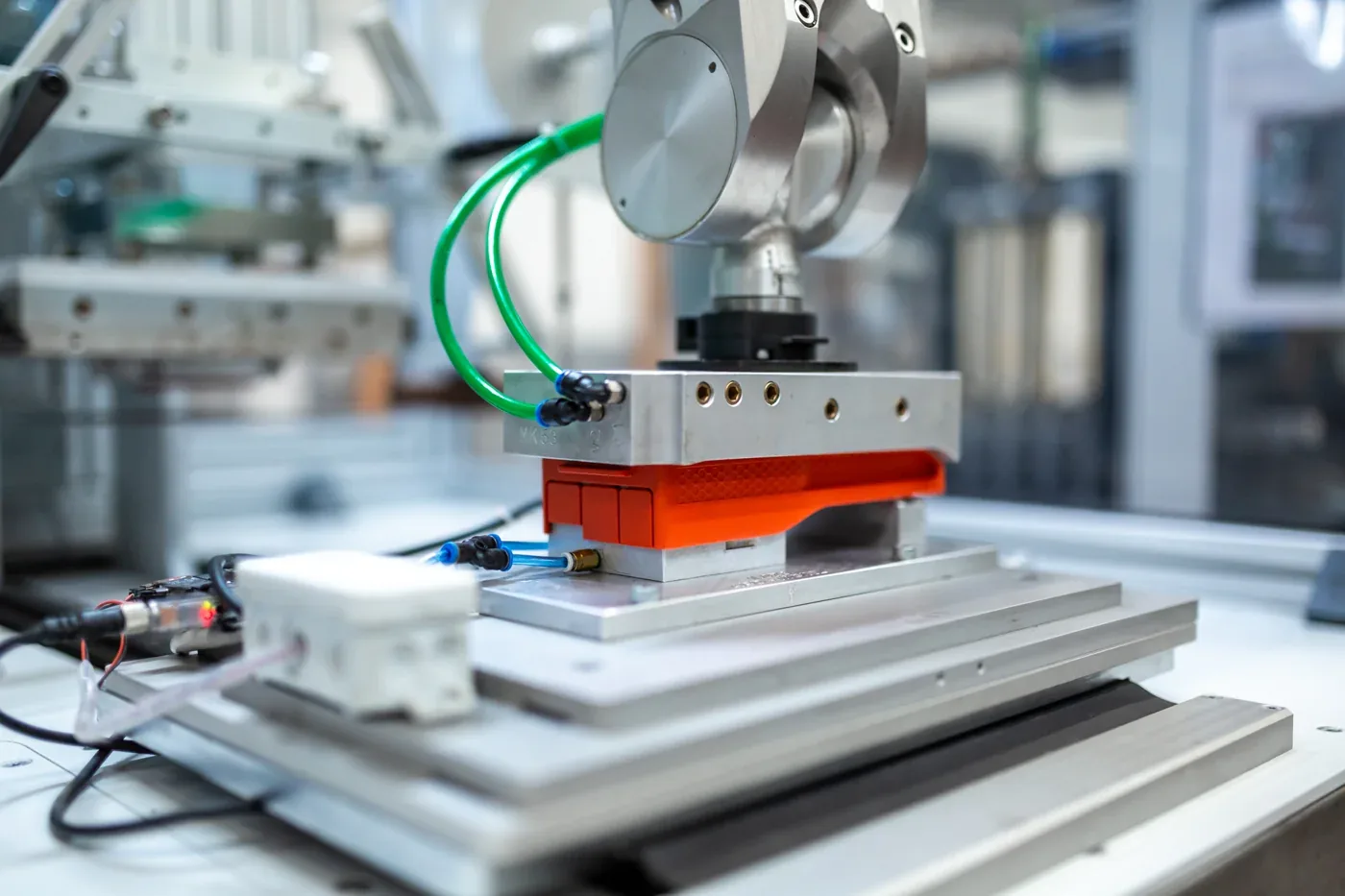
FJ did not multiply the stations. Instead, for multi-pole terminals, the same station is approached several times according to the number of poles. Thomas Püls Senior developed his own linear transport system for this purpose. The automated assembly systems were also created in-house.
The stepper motor used initially proved not to be sufficiently stable under real machine conditions. Vibratory bowl feeders and other influences impaired positioning. Matthias Langheinrich therefore switched the drive to a servo motor. This allowed the movement to be controlled reliably and precisely.
Economical automation from in-house development
The in-house assembly systems enabled reliable production of different variants without equipping the machine with additional stations for each number of poles. As a result, the automation remained compact and economical.
FJ was also able to adapt the systems directly to changed components, volumes and process requirements.
Finishing processes under one roof
The depth of production also includes pad printing, hot foil stamping and ultrasonic welding. FJ carries out these processes in-house and can integrate them directly into the respective production and assembly processes.
Electroplating is carried out by specialised external partners. What matters here are reliable processes, professional cooperation and consistent quality.
“We develop our assembly systems ourselves. This allows us to tailor the automation precisely to the component, the variants and the volumes required.”