Protection for decentralised inverters
An inverter in a control cabinet operates under comparatively protected conditions. Decentralised inverters, by contrast, are mounted directly on the machine and have to withstand the harsh conditions of industrial production environments, including vibration, heat and demanding cleaning processes.
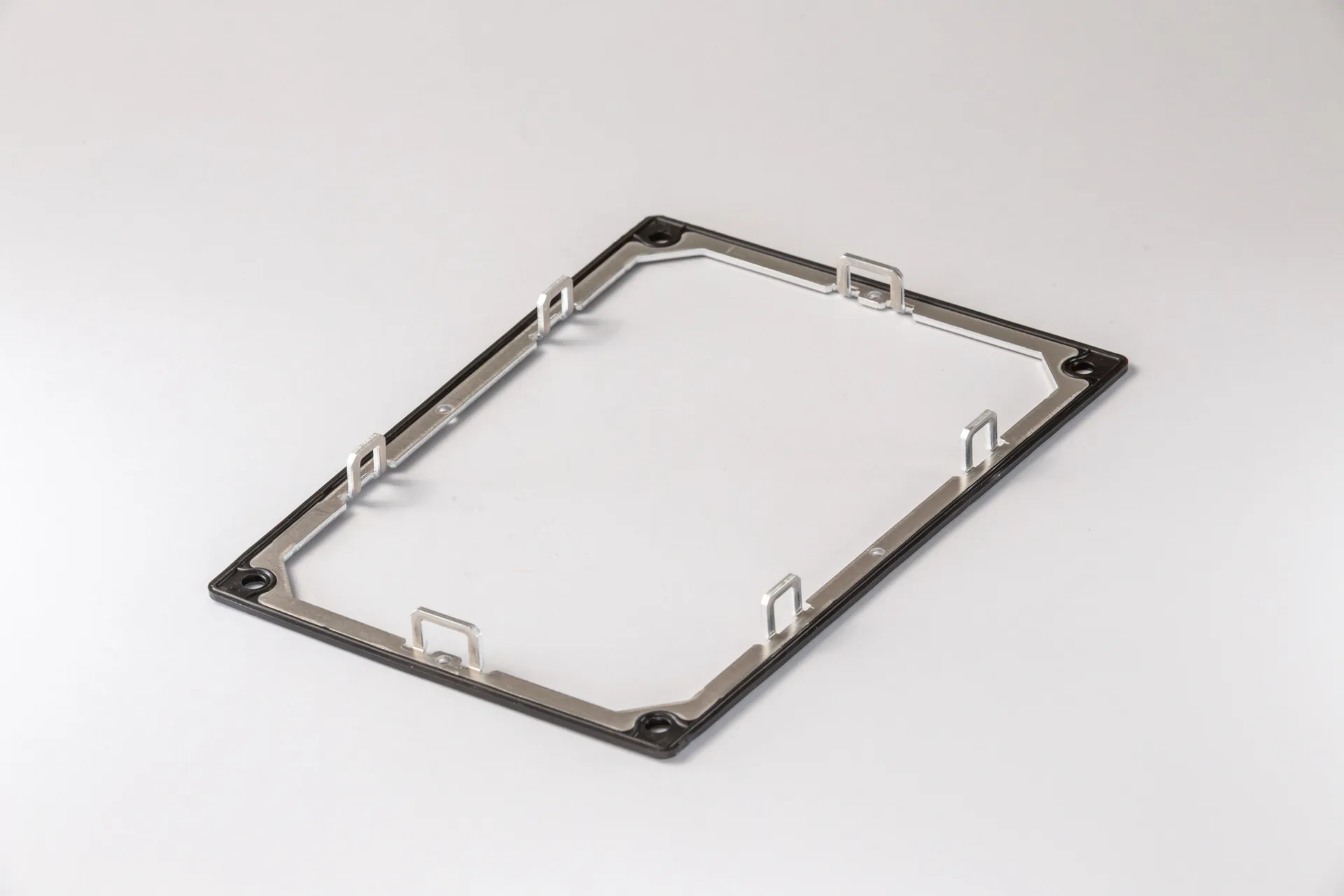
The first decentralised inverter from a drive technology manufacturer consisted of three castings: a lower casting, a lid and a heat sink with numerous cooling fins. Inside, a cover protected the electronics and at the same time connected the three castings. This inner cover formed the basis for the rigid part that was developed further later on.
From a separate to a moulded-on seal
The first device used a separate seal that sealed between the castings. The design worked, but was continuously developed further in the following device generations. First, FJ stiffened the inner cover, then additional screw holes were added.
In the next generation, FJ moulded the seal directly onto the rigid part. This created a firm unit in which the seal is already precisely positioned during manufacture. The rigid part was also printed with the required circuit diagram.
Integrated support for sensitive components
During the moulding process, damping inserts were also placed in the mould. The resilient foam inserts bond with the rigid component during production and support sensitive electronic components inside the inverter.
The component thus combines several functions: it protects the electronics, connects the castings, carries the circuit diagram, holds the seal and supports internal components.
Fewer assembly steps, securely positioned seal
The directly moulded-on seal makes assembly easier and ensures that it always sits in the intended position. At the same time, the separate handling and positioning of an additional sealing part is no longer necessary.
As new moulds involve considerable investment, FJ and the customer jointly assessed with each generation which improvements made technical sense and were economically feasible.
“With the directly moulded-on seal, the inner cover became a multifunctional component that combines protection, sealing and easier assembly.”