When a pallet of cables turned up unannounced in the yard
The actual terminals had been part of FJ’s scope of supply since the device series was developed. One morning, a whole pallet of cables was also standing in the yard, without any prior notice. Behind this was a clear message from the customer’s production planning: connecting the cables to the terminal blocks did not fit into their own production workflow.
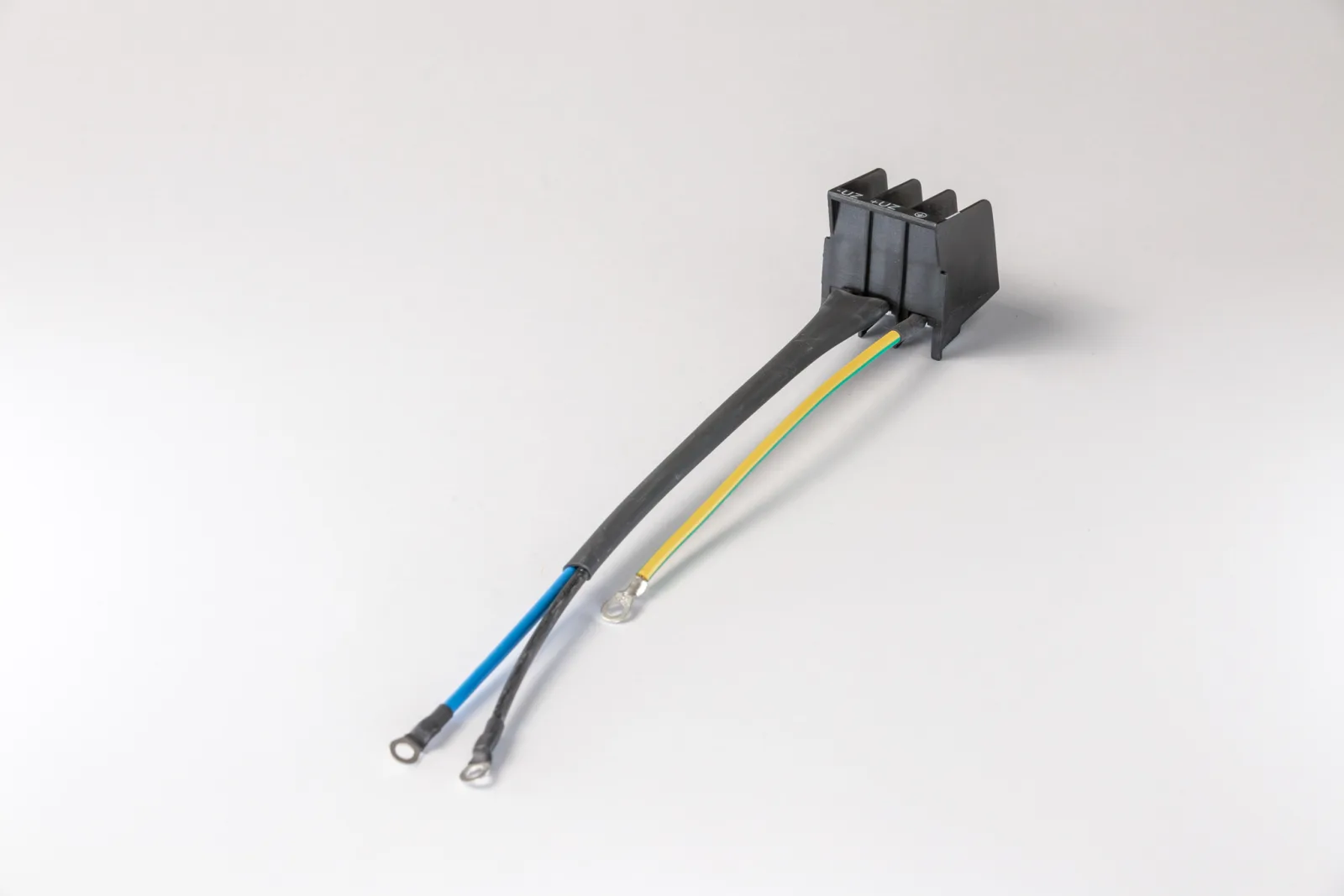
The electrical connector consists of a three-pole, printed terminal block. On the top and bottom there are combination terminal screws. Additional cables leading to the circuit board are connected on the top. Cable lugs at both ends of the cables allow secure attachment to the terminal block and the circuit board.
From customer-supplied material to cable assembly
FJ initially took over the assembly and mounting of the cables supplied by the customer. This included, among other things, the use of heat-shrink tubing and the orderly bundling of the cables.
As customer-supplied material was impractical in the ongoing process, FJ later also took over procurement. The commercial requirement was clear: the complete service could not cost more than the customer’s previous in-house production.
Overmoulded bushings for a robust connection
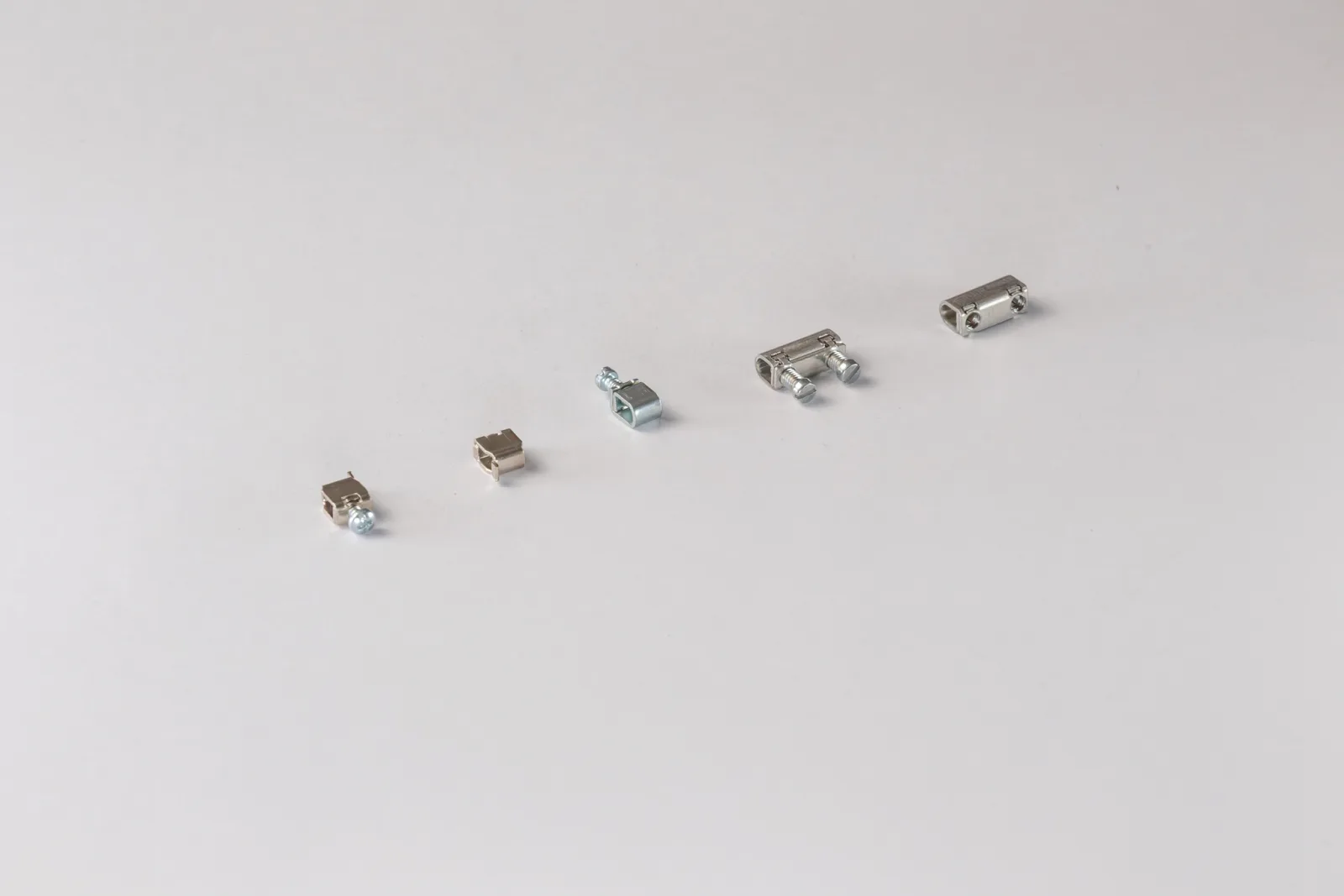
The threaded bushings of the terminal blocks were initially pressed in. At high tightening torques, however, there was a risk that the bushings would turn in the plastic.
FJ therefore switched the process to overmoulded threaded bushings. They are firmly anchored in the component and provide a permanently robust basis for the screw connection.
Ready to install for final assembly
The customer receives the printed electrical connectors including the assembled cables as a ready-to-install assembly. This eliminates several work steps in their own production, and the assembly can be fitted directly into the device.
“The single terminal block became a ready-to-install assembly, including procurement, cable assembly and assembly.”